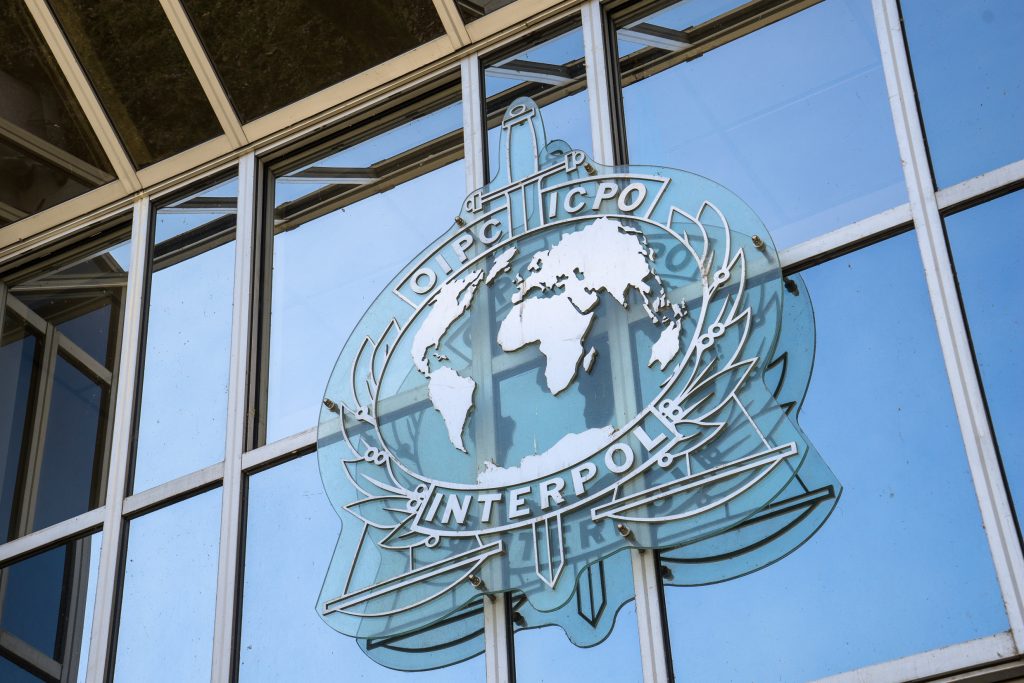
Red Notice Monitor spends most of its time on hard cases: politically motivated notices, abusive diffusions, and the slow work of reform. Many readers need the foundations first. Journalists, practitioners and people who suspect they have been named in an INTERPOL alert all ask the same opening question, so this Back to Basics series starts there. This first part explains what INTERPOL is, how it is run, and why its data carries so much weight.
What is INTERPOL?
INTERPOL, the International Criminal Police Organization, is an intergovernmental organisation that lets the police forces of its 196 member countries share information with one another. It is not a global police force. It has no detectives of its own who arrest people, and it cannot compel any country to act on the information it circulates.
The popular image of an INTERPOL agent kicking down a door is fiction. What INTERPOL really provides is plumbing: a secure communications network, a set of databases, and a system of colour-coded notices that turn one country’s request into an alert seen by police everywhere.
Where did INTERPOL come from?
The organisation began life in Vienna on 7 September 1923 as the International Criminal Police Commission. It adopted its present Constitution and the name INTERPOL in 1956. The General Secretariat has been based in Lyon since 1989, and the Global Complex for Innovation in Singapore, opened in 2015, focuses on cybercrime and digital policing.
Two provisions of the Constitution matter more than any others to the people we act for. Article 2 requires INTERPOL to work “in the spirit of the Universal Declaration of Human Rights”. Article 3 strictly forbids it from undertaking “any intervention or activities of a political, military, religious or racial character”. Most challenges to a Red Notice are, in the end, arguments about one or both of these articles.
How is INTERPOL governed?
INTERPOL has four main organs.
The General Assembly is the supreme governing body. Every member country has a seat, and it meets once a year to adopt resolutions, set the budget and elect office holders. The 93rd session met in Marrakech from 24 to 27 November 2025 and elected Lucas Philippe of France as President for a four-year term. The 94th session is due to meet in Hong Kong from 30 November to 3 December 2026, when all seven seats on the Commission for the Control of INTERPOL’s Files are up for election. We cover those elections in The CCF Elections Part 1: Every Seat in Play.
The Executive Committee has 13 members: the President, three Vice-Presidents and nine Delegates, drawn from different regions. It supervises the work of the General Secretariat between Assemblies and vets candidates for election.
The General Secretariat runs the organisation day to day from Lyon. It is headed by the Secretary General, currently Valdecy Urquiza of Brazil, who took office in November 2024.
The Commission for the Control of INTERPOL’s Files (CCF) is the independent body that checks personal data processed through INTERPOL’s channels complies with the organisation’s rules. It is also the body an individual petitions to see, correct or delete data held about them. Part 3 of this series explains how that works.
What are National Central Bureaus?
Each member country runs a National Central Bureau, or NCB, usually housed within its national police. The NCB is the country’s point of contact with INTERPOL and with every other NCB. In the United Kingdom the NCB sits within the National Crime Agency.
This detail matters. When a Red Notice or a diffusion is requested, it is the NCB of the requesting country that sends it. INTERPOL checks the request, but the information in it, and the case behind it, comes from national authorities. Where those authorities are acting in bad faith, the INTERPOL system carries their allegations around the world.
What does INTERPOL actually hold?
INTERPOL connects NCBs through I-24/7, its encrypted police communications network. Through it, officers can search INTERPOL’s 19 databases, which cover wanted persons, fingerprints, DNA profiles, stolen and lost travel documents, stolen vehicles, stolen works of art and firearms, among others. The editors’ new book, INTERPOL Law and Practice (Thomson Reuters, 2026), notes that these databases are searched around 22 million times a day. A passport scan at a border can trigger a hit in seconds.
On top of the databases sits the notice system. There are Red, Blue, Green, Yellow, Black, Orange and Purple Notices, the INTERPOL-United Nations Security Council Special Notice, and since January 2025 a pilot Silver Notice for tracing criminal assets. Member countries can also send diffusions, which are alerts circulated directly from one NCB to others. Part 2 looks at the Red Notice and the diffusion in detail. Part 4 shows how several notice types can be used together in a single investigation.
Why does this matter to individuals?
For most of the world’s population, INTERPOL is invisible. For the person named in a Red Notice or diffusion, it becomes the single largest fact in their life. Border crossings become a gamble. Banks close accounts. Visa and asylum applications stall. An arrest can take place thousands of miles from the country bringing the case, followed by months of extradition proceedings.
The same speed and reach that make INTERPOL valuable against genuine fugitives make it attractive to governments that want to pursue critics, business rivals and political opponents abroad. Freedom House, the UN and this site have documented that misuse for years. INTERPOL has introduced safeguards, and some of them work. None of them work automatically.
INTERPOL is a network, and a network is only as trustworthy as the countries feeding it.
Next in the series: Back to Basics Part 2: What is a Red Notice? For a fuller introduction, see INTERPOL Explained.
—
Image: ©Shutterstock