Once an application to delete a Red Notice has gone in, the question clients ask us most often is what happens next. The Statute of the Commission for the Control of INTERPOL’s Files (CCF) sets the timetable. The Commission has one month from receipt to decide whether a request is admissible. From that date it has four months to decide a request for access to data, and nine months to decide a request for correction or deletion.
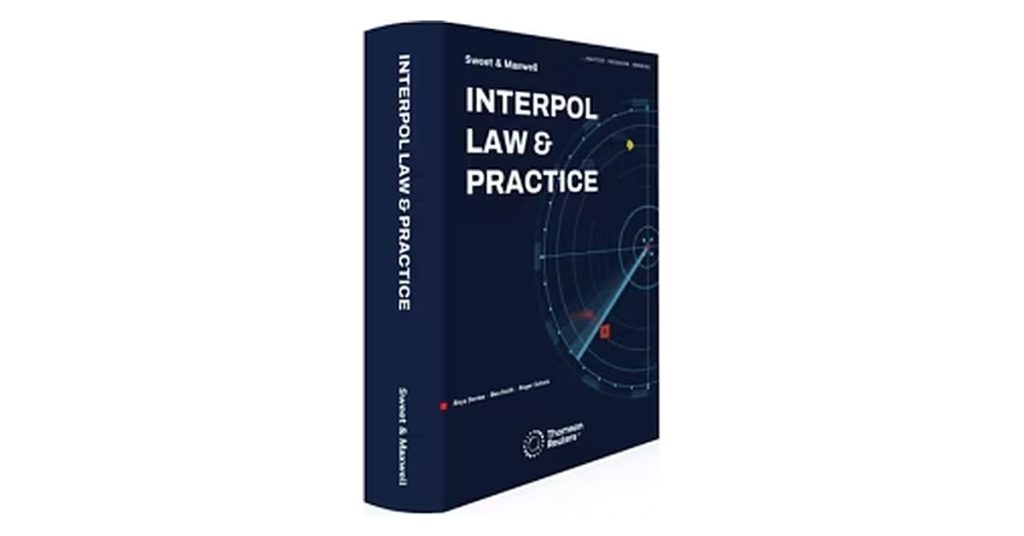
Practice is less tidy. Twelve to fifteen months is common, and complex cases run longer. Chapter 8 of our book, INTERPOL Law and Practice (Thomson Reuters, 2026), follows a request from filing to decision and explains where the time goes.
What does the CCF do once a request is admissible?
The Commission first asks INTERPOL’s General Secretariat whether it holds data on the applicant. If it does, the Commission examines whether that processing complies with INTERPOL’s rules. It does not confine itself to the applicant’s file. It can put questions to the requesting National Central Bureau (NCB), to the General Secretariat and to other bodies with access to INTERPOL’s systems. It commonly asks the applicant’s country of residence whether an extradition request has been received there, and whether it was refused.
Applicants should expect questions of their own. Answer them promptly. A slow reply adds months to a timetable that is already overrunning.
In political cases the requesting NCB often says little. When it does reply, the standard line is that the evidence is strong, that the applicant can appeal and that due process will be respected. The Commission weighs that against what the applicant has produced, which is why the evidence filed with the application carries so much of the case.
Why does the burden fall on the applicant?
Three features of the system make the applicant’s task harder than it first appears.
The first is the presumption of accuracy. Article 128(1) of INTERPOL’s Rules on the Processing of Data (RPD) treats what an NCB submits as accurate and relevant. Yaron Gottlieb, then a lawyer at INTERPOL’s headquarters in Lyon, put it plainly to the Center for Public Integrity in 2011: “We assume that what we receive here is accurate and relevant.” That extends to the assumption “that an arrest warrant is issued by a judge who is not corrupt. And of course, that the case is not political.” A full review follows only if new information suggests otherwise. The CCF has never set a standard of proof for challenges under Articles 2 and 3 of INTERPOL’s Constitution.
The second is the rule of non-enquiry. Borrowed from extradition law, it means the reviewing body does not second-guess the requesting state’s criminal justice system. The CCF asks a single question: does the data comply with INTERPOL’s rules? It does not weigh evidence or decide guilt. An application built on the argument that the client did not commit the offence is aimed at the wrong question.
The third is cumulative assessment. Doubts under Article 2 may not justify deletion on their own, but combined with political indicators under Article 3 they can tip the balance. INTERPOL’s Repository of Practice distinguishes “distinct” compliance issues, where either ground is enough on its own, from “cumulative” ones, where the grounds reinforce each other. Submissions should build the case on both grounds rather than stake everything on one.
Does winning an extradition case remove a Red Notice?
No. Clients often assume it does. General Assembly Resolution AGN/53/RES/7 (1984) confirms that a refusal to extradite does not automatically cancel a notice. The CCF has repeatedly held that other states “remain at liberty to decide sovereignly to cooperate”, which includes extraditing the applicant if he is later arrested on their territory.
What matters is the reason for the refusal. A refusal on human rights grounds, reached after a court has examined the evidence, can form part of a “body of corroborating evidence” that the notice breaches Article 2. The Commission has found a notice non-compliant on that basis where the court identified risks of torture and of an unfair trial. A refusal on political grounds strongly supports an Article 3 challenge, although the submission must still meet INTERPOL’s predominance test rather than the domestic standard.
Other refusals carry little weight. A requested state that does not extradite its own nationals, or whose limitation period has expired, has said nothing about the merits of the notice.
We advise clients who win an extradition case to apply to the CCF straight away, with the judgment at the centre of the application. A judgment left in a drawer deletes nothing.
For the arguments on acquittals, business disputes and Diffusions, see our post on Chapter 6, Acquitted but Still on a Notice or Diffusion? If you are subject to a Red Notice, read our guide on how to remove a Red Notice or contact us in confidence.
INTERPOL Law and Practice by Ben Keith and Rhys Davies is published by Thomson Reuters and available from Sweet & Maxwell.