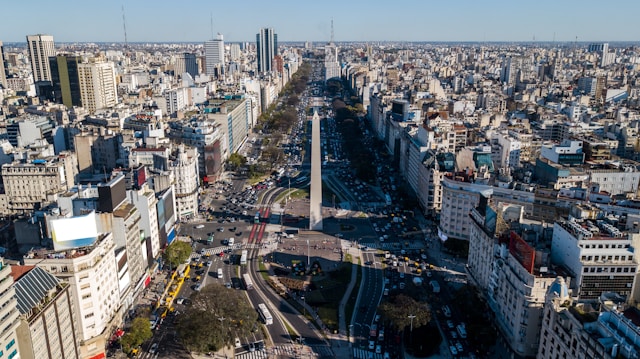
We returned just over a week ago from Buenos Aires, where we spent three days at the Bar Association speaking about transnational organised crime and international criminal law. The timing couldn’t have been more relevant.
Over recent months, we’ve written extensively about the surge in Interpol activity across South America. The Santiago declaration saw police chiefs commit to greater use of Interpol systems. President Lula’s visit to Lyon resulted in a new regional task force. High-level meetings in Brasilia have addressed transnational organised crime. The machinery of international law enforcement cooperation has been accelerating across the continent.
The seminar brought together legal professionals, policymakers, and academics from across Latin America. Our session on 2nd December focused on Interpol operations, transnational crime, and transnational repression. We explored how the Red Notice system works in practice, how it can be exploited for political purposes, and what mechanisms exist to challenge abusive notices.
Questions ranged from technical aspects of the CCF deletion process to broader concerns about Interpol’s governance. The engagement from attendees reflected a growing awareness that these issues are no longer academic—they’re affecting clients, citizens, and democratic institutions across the region.
Cristian González Ruiz spoke on representing clients in transnational criminal litigation.
The conference provided a forum for discussing how international law enforcement cooperation can be strengthened whilst preventing abuse.
Shortly before the conference, we wrote for LexLatin about Venezuela’s weaponisation of Interpol. Venezuela under Maduro has sought Red Notices against opposition figures. These aren’t isolated incidents but part of a pattern of transnational repression.
The piece generated substantial discussion at the conference. Several lawyers shared experiences with politically motivated notices from various countries in the region. The consensus was clear: what was once seen as a problem primarily affecting other continents has arrived in South America.
The response from South American media was telling. Publications including Diario Estrategia, Líder Legal, EstadoDiario, and Lawyerpress NEWS covered our warnings about the political use of Interpol in Latin America. This media attention matters—public awareness is the first step towards reform.
Looking ahead, South America faces particular challenges regarding Red Notices. El Salvador’s model—over 800 active Red Notices—demonstrates how security concerns can provide cover for mass targeting. Other countries facing similar challenges may follow suit. The increased cooperation promised by the Santiago declaration creates opportunities for both legitimate law enforcement and potential abuse. A politically motivated notice from one country can now have consequences across the continent.
Some of the region’s institutional weaknesses compound these risks. Many countries lack robust mechanisms for challenging Red Notices. Unlike Europe, where courts regularly scrutinise extradition requests, Latin American jurisdictions may lack the legal framework to effectively challenge abuse. We’re seeing Red Notices arising from commercial disputes repackaged as criminal cases, blurring the line between legitimate prosecution and weaponisation of criminal law. If Venezuela’s attempts to use Interpol against foreign leaders go unchallenged, it sets a precedent other governments may follow.
The conversations in Buenos Aires made clear that awareness is growing, but awareness alone isn’t enough. The region needs stronger judicial review mechanisms, regional cooperation on identifying politically motivated notices, and training for lawyers and judges on Interpol’s rules and the CCF process. Civil society monitoring and diplomatic pressure on countries that systematically abuse the system are equally crucial.
Our time in Buenos Aires underlined both the urgency of these issues and the appetite for solutions. As we wrote earlier this year, the system is sound, but sound systems require constant attention. Based on what we saw in Buenos Aires, South America has the professionals willing to do this work.
—
Image: Unsplash



 Spanish
  English