On 10 March 2026, the UN Group of Human Rights Experts on Nicaragua informó that the Nicaraguan government has financed political repression through corruption while operating a surveillance and intelligence network targeting critics both inside and outside the country. The findings were presented in the Group’s latest report to the UN Human Rights Council (A/HRC/61/56).
According to the UN, the system of repression relies on coordinated state action, intelligence operations and the sustained diversion of public resources – all of it traceable to the protests that erupted in Nicaragua in 2018. The report documents how authorities have targeted political opponents in exile through surveillance, intimidation, property confiscations and proxy retaliation against relatives still living in Nicaragua. It also details the misuse of Interpol mechanisms as part of that campaign.
On the Interpol findings specifically, the report is striking. Interpol’s National Central Bureau in Managua has repeatedly submitted false information to the INTERPOL Stolen and Lost Travel Document database, incorrectly reporting the passports of political opponents as stolen or revoked. As we have previously reported on Red Notice Monitor, this is a tactic deployed with some frequency by authoritarian states – Türkiye being the most frequently cited example.
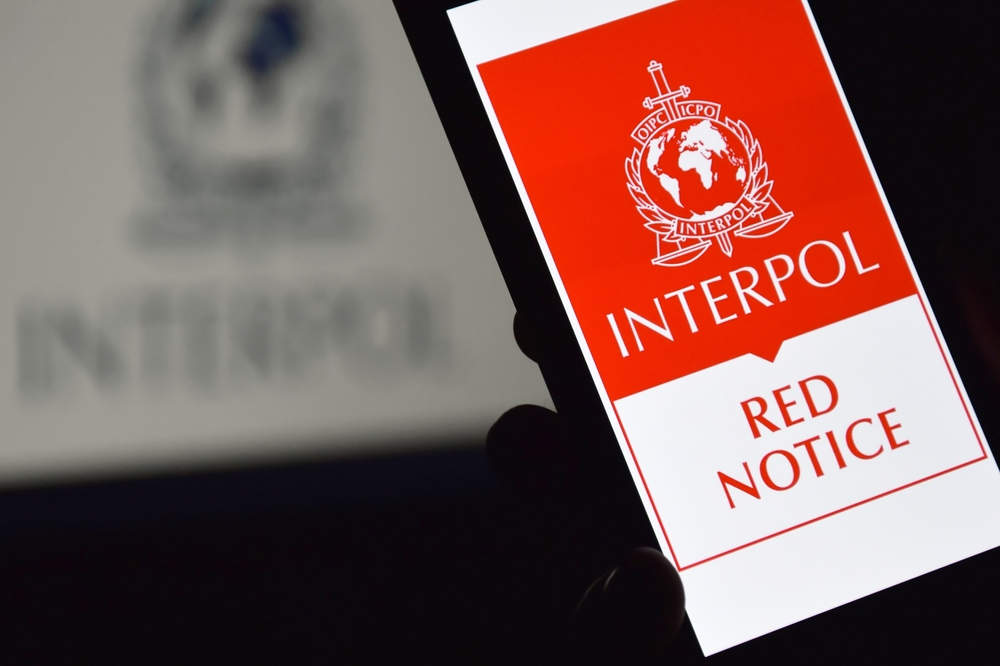
Nicaraguan authorities have also requested the issuance of Red Notices against real or perceived opponents, creating serious fear among exiled Nicaraguans of detention, deportation or extradition in third countries. In parallel, smear campaigns linking critics to money laundering or terrorism financing have been circulated online, apparently designed both to discredit opponents and to trigger compliance alerts from financial institutions, adding another layer of difficulty for Nicaraguans trying to rebuild their lives in exile.
These findings reflect a pattern that Red Notice Monitor has documented across multiple jurisdictions. Governments accused of systemic repression routinely seek to maintain control over critics who have gone into exile – through surveillance of diaspora communities, harassment of family members remaining in the home country, intelligence gathering abroad, and the initiation of legal proceedings against political opponents in third countries. Recent investigations in Europe and North America have uncovered similar tactics linked to several states, including alleged overseas police networks associated with Chinese authorities, Russian intelligence operations targeting critics abroad, and Iranian plots against dissidents in Europe.
The misuse of Interpol systems frequently forms part of this wider strategy. Red Notices are intended to help locate individuals wanted for serious criminal offences. Because the system relies on information supplied by member states, however, it is inherently vulnerable to manipulation by governments willing to deploy criminal allegations for political ends. In 2025, Red Notice Monitor co-editors Ben Keith and Rhys Davies gave evidence to the UK Parliament’s Joint Committee on Human Rights during its inquiry into transnational repression in the United Kingdom. The Committee’s subsequent report highlighted concerns about precisely this dynamic – the risk that authoritarian states will seek to misuse Interpol mechanisms to pursue critics living overseas.
The UN experts’ findings make clear that Nicaragua’s campaign against its political opponents extends well beyond its own borders. The report is a further illustration of how intelligence operations, diplomatic networks and international policing tools can become intertwined in the pursuit of those who have sought safety abroad. As international scrutiny of transnational repression continues to grow, the challenge for institutions such as Interpol remains the same: ensuring that mechanisms designed to combat serious crime are not turned into instruments of political persecution.
—
Image: Unsplash



 Spanish
  English